

The Man Who Mapped the Psyche
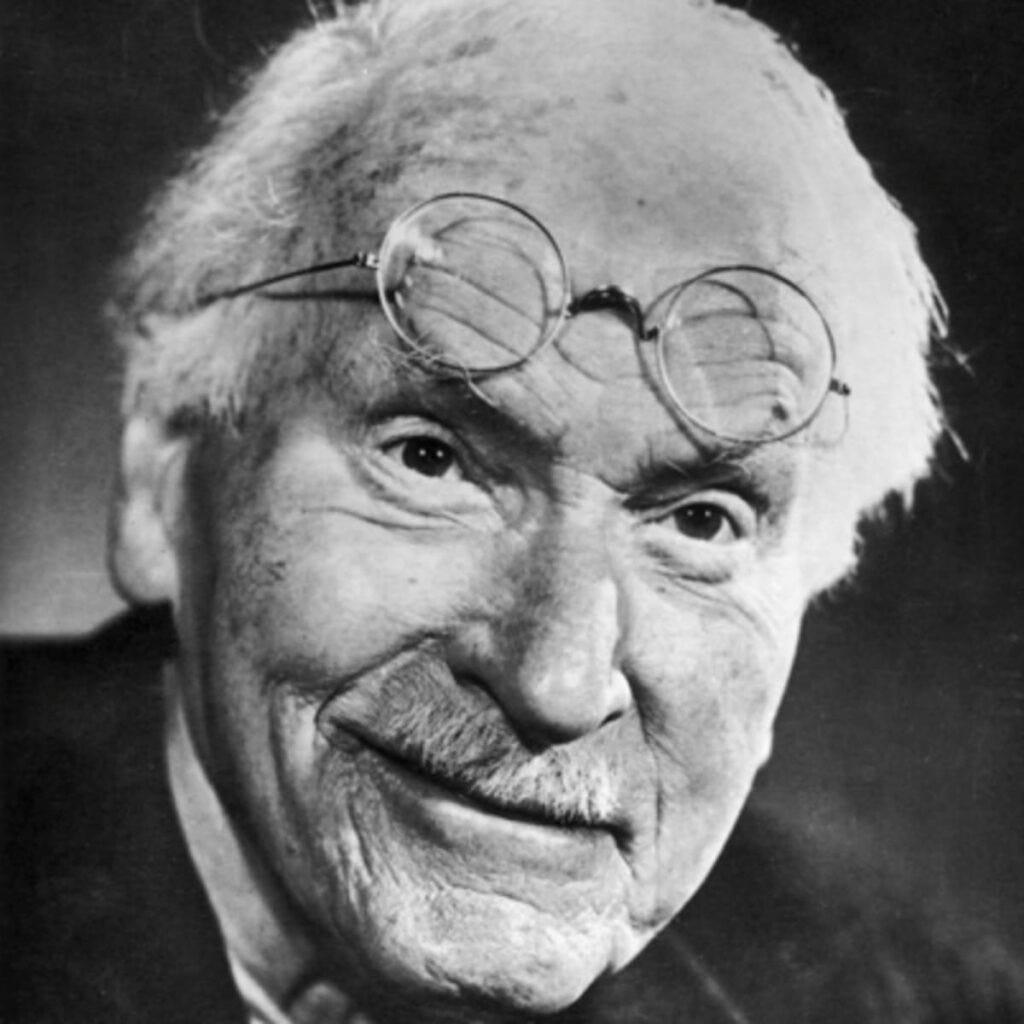
Introduction to Carl Jung

There is a story Carl Jung told about a patient who came to him in crisis — educated, successful, socially admired, and completely unable to explain why he felt like he was dying inside.
No diagnosis covered it. No medication had touched it. No amount of achievement had made it go away.
Jung’s response was not to offer a framework or a technique. He asked: What part of yourself have you never met?
That question is still one of the most important in psychology. And in over a decade of working with people navigating anxiety, depression and the particular kind of exhaustion that comes from living at a distance from yourself — it is one I come back to again and again.
This piece is my attempt to give you the full map. Not just the shadow (we’ve covered that before), but the whole terrain: who Jung was, what he discovered, and what his model of the psyche means for your actual life.
— — —
A Man Shaped by His Own Depths
Carl Gustav Jung was born in 1875 in rural Switzerland to a pastor father and an eccentric, visionary mother. He was deeply isolated as a child — drawn inward, given to solitude, spending hours in private fantasy and careful observation of the adults around him.
He was not a model student. He hated school intensely enough that he fainted regularly to avoid it — until his father made a passing remark about his potential incompetence, and something shifted. Jung began to read voraciously: philosophy, medicine, religious texts. He completed his medical degree, worked under the prominent psychiatrist Eugen Bleuler, and — in 1907 — sat down with Sigmund Freud for the first time.
They talked for thirteen hours.
A profound friendship and intellectual partnership followed. They travelled together, analysed each other’s dreams, co-developed their theories. Jung was positioned as Freud’s natural heir. Then the cracks appeared: Freud was a scientist who wanted to keep the unconscious grounded in biology and sexuality. Jung kept moving toward something wider — toward myth, toward symbol, toward the collective.
They split in 1913. And what followed for Jung was not a career triumph but a breakdown.
From approximately 1913 to 1918, he entered what he described as a confrontation with the unconscious — a dark night that lasted years. He conducted psychological experiments on himself, went into the depths, and recorded what he found. Most of this material eventually became The Red Book, a strange and beautiful document that is part journal, part artwork, part descent into myth.
He came back changed. And the psychology he brought back with him is what we are here to discuss.
The Map
Jung divided the psyche — the complete personality, including everything you feel, think and do — into three realms.
Consciousness
This is the realm of direct awareness: what you know about yourself, what you can observe and articulate, the running narrative you maintain about who you are.
At its centre sits the ego — the structure that creates your sense of distinct, continuous identity. The ego is the author of your internal story. It decides what to let in and what to filter out, what to identify with and what to push away.
What the ego filters away does not disappear. It goes underground.
The Personal Unconscious
Just beneath consciousness lies the personal unconscious — the repository of everything your ego has repressed, forgotten, or not yet integrated. Memories, emotions, impulses, and desires that did not fit the identity you were building. They are not gone. They continue to operate, shaping your behaviour from below the surface.
This is broadly where Freud stopped. Jung went further.
The Collective Unconscious
This is the part of Jung’s model that changed everything — and the part most people are least familiar with.
Jung proposed that beneath the personal unconscious lies a deeper layer: one that is not individual at all, but shared across all of humanity. Not memories you have personally repressed, but psychological structures that have been forming since the beginning of human history — passed down through something closer to the way instinct is inherited.
He found this empirically: noticing the same images, symbols and themes appearing in the dreams and delusions of patients who had no cultural connection to one another. The same motifs appear in myths from societies that had never met. The same figures recurring in the art, religion and folklore of civilisations separated by thousands of miles and thousands of years.
He called these universal structures archetypes.
— — —
The Archetypes
Archetypes are not images. They are predispositions — inherited psychic structures that shape how we experience the world before we consciously decide anything.
The Persona is the mask you wear for the world. The face is constructed to be accepted, respected, and loved. The persona is necessary — but when it becomes your identity rather than your interface, everything that doesn’t fit the mask gets pushed underground.
The Shadow is everything the ego refuses to identify with. Every emotion deemed unacceptable, every impulse pushed away, every quality that did not belong in the persona. More on this shortly.
The Anima and Animus are the contra-sexual archetypes: the unconscious feminine in men, the unconscious masculine in women. They function as bridges between the ego and the deeper layers of the psyche, frequently appearing in dreams and in the people we fall intensely in love with — or irrationally hate.
The Self — not the ego, but the Self — is the organising centre of the entire psyche. The totality. Getting the ego as close as possible to the Self — closing the gap between who you perform yourself to be and who you actually are — is the work of a lifetime. Jung called this process individuation.
— — —
What Integration Actually Means
When I use the word integration, I am not talking about expressing every repressed impulse. I am talking about acknowledgement — the willingness to stop pretending that these parts of you don’t exist.
Repression is expensive. It costs enormous amounts of psychic energy. The project of keeping the shadow underground, maintaining the persona intact, pushing away the parts of yourself that don’t fit — this consumes resources that could otherwise be available for living.
When you begin to acknowledge what’s been repressed, something changes. The anger you couldn’t touch turns out to have been telling you that your boundaries were being crossed. The envy you shamed yourself for was pointing toward something you genuinely wanted. The grief you suppressed was love with nowhere to go.
Shadow material, brought into the light, becomes information. It becomes part of you — available, integrated, no longer operating from below.
This is not a comfortable process. It requires what Jung called radical self-acceptance — and radical self-acceptance requires radical self-honesty. To genuinely sit with the possibility that what you see, fear or hate in others could be inside you. That you contain more darkness than you would like to believe — and also, proportionally, more capacity than you have yet accessed.
He called this confrontation with the shadow a one-way path. Once you begin to bring these contents into awareness, you cannot credibly pretend you haven’t seen them. The comfortable illusion of being purely good quietly crumbles. What replaces it is not perfection. It is something more durable: the stability of a person who knows what they contain, who is no longer at the mercy of what they haven’t examined.
— — —
The Goal: Individuation
Jung called the goal of this work individuation — the lifelong process of becoming more fully and authentically oneself.
Not self-improvement in the modern sense. Not optimisation. Not becoming better at performing the version of yourself that the world approves of.
The opposite of that.
Individuation is the gradual process of closing the gap between the ego — the person you believe yourself to be — and the Self — the person you actually are, in your full complexity, light and shadow together.
It is slow. It is non-linear. It will not be completed. Complete individuation is, in the absolute sense, likely impossible. In the above-average sense, it is perhaps the most difficult and most rewarding project a human life can undertake.
What he observed in the people who committed to it was not that they became problem-free. It was that they became increasingly impossible to manipulate — by others, and by their own unconscious patterns. They developed emotional stability not through suppression, but through integration. They became more themselves: more honest, more present, more willing to take up space in their own lives.
— — —
A Note on This Work
Jung developed all of this from the inside. His theories were not built from a distance — they were won through a descent into his own depths that nearly cost him his mind.
I find this worth remembering. His work is not abstract. It is the product of someone willing to be honest about what the psyche actually contains — not what we would like it to contain.
The people I work with who make genuine progress are not the ones who have the most insight or the most motivation. They are the ones willing to look at themselves honestly — consistently, without dramatic expectation of resolution, over time.
It is for anyone who would rather live consciously than comfortably.
— — —
Working With This Material
If this piece opened something for you — if you recognise yourself in any of it — I want to be direct: this is deep work, and it is possible to do it with support.
At Naga, I work with individuals navigating anxiety, depression, burnout, and the quiet sense of living at a distance from themselves. My approach draws on Jungian depth psychology alongside nutritional therapy, breathwork, qigong, and somatic work — because the psyche and the body are not separate problems.
The Bodha Method is my 8–12 week integrative programme for people ready to go further. It is built for individuals who have tried one approach at a time and found it insufficient, because what they were facing required more than one dimension of support.
You can find out more at www.naga.care or simply reply to this email. I read everything.
— — —
If Jung’s work is new to you, start with Modern Man in Search of a Soul or Memories, Dreams, Reflections (his autobiography). Both are readable, personal, and likely to change how you see yourself.
If it is not new, go back to the questions you last avoided. That is always where the next layer lives.
Mounir
Naga · Root & Release
— — —
If you think somebody could benefit from reading this, please share it with them.